
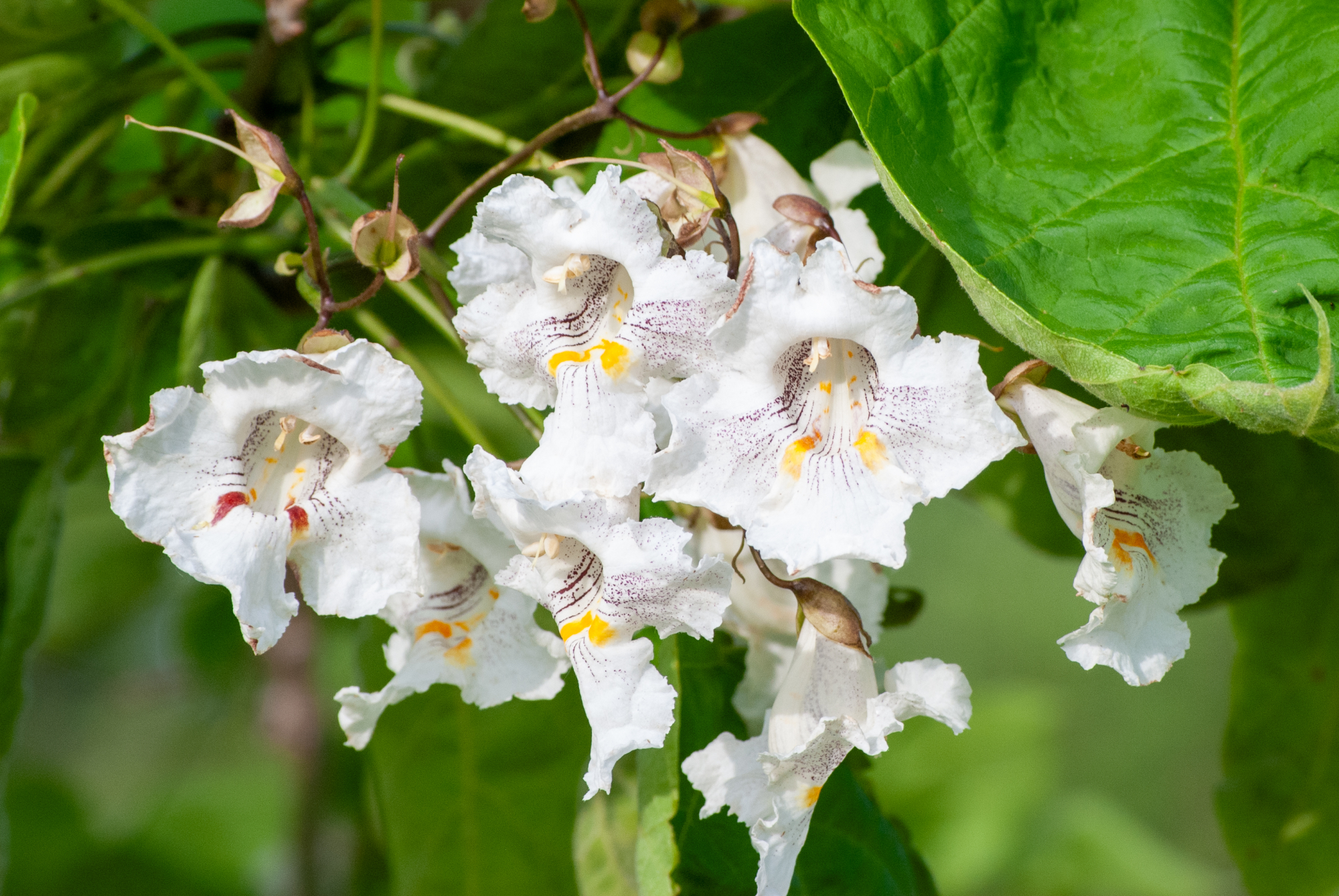
Northern Catalpa (Catalpa speciosa) is a large deciduous tree native to portions of the Midwestern United States and is widely planted throughout the Great Plains for its adaptability and ornamental characteristics. It is recognized by its enormous heart-shaped leaves, showy clusters of white trumpet-shaped flowers, and long, slender seed pods that can remain on the tree through winter. Blooming in late spring to early summer, the fragrant flowers attract bees, butterflies, and hummingbirds. Northern Catalpa grows rapidly and tolerates a wide range of soil conditions, including clay soils, occasional flooding, urban environments, and air pollution. Mature trees typically reach 40 to 70 feet in height with a broad, irregular canopy that provides dense shade. It also serves as the host plant for the Catalpa Sphinx moth, whose caterpillars are prized as fishing bait. Because of its rapid growth and tolerance of challenging conditions, Northern Catalpa is often used as a shade tree, specimen tree, or naturalized planting in large landscapes.
Plant Description
Common Name(s): Northern Catalpa, Western Catalpa, Hardy Catalpa
Genus: Catalpa
Species: speciosa
Plant Requirements
Plant Type: Deciduous Tree
Zones (1-13): 4-8
Light Needs: Full Sun
Water Needs: Moist
Available Space To Plant: 24-60 ft
Height: More than 15 ft
Spread: More than 12 ft
Maintenance: Medium
Plant Characteristics
Flower Characteristics: Showy, Fragrant
Bloom Color: White
Bloom Time: Spring
Leaf Color: Green
Attracts Wildlife: Hummingbirds, Butterflies
Plants that Tolerate: Clay soil, Wet soil, Air pollution
Uses: Shade tree